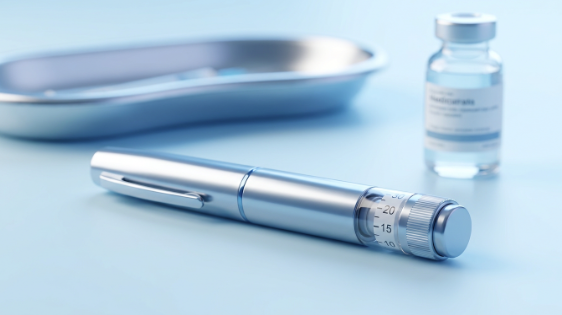
Clinicians do not start from the pen. They start from indication, then history, then screening, and the device follows the prescription. By the time a dose selector is involved, the amount has already been decided, which is why no chart of pen clicks can substitute for the sequence that produced it.
Indication comes before anything else
Semaglutide is sold under different names with different approvals, and the approval determines the whole plan. Ozempic is indicated as an adjunct to diet and exercise to improve glycemic control in adults with type 2 diabetes, to reduce major adverse cardiovascular events in adults with type 2 diabetes and established cardiovascular disease, and to reduce the risk of sustained kidney function decline in adults with type 2 diabetes and chronic kidney disease. Wegovy is the semaglutide product approved for chronic weight management.
Those are not interchangeable prescriptions. The labeled dose steps differ, the maintenance targets differ, and the device presentations differ. A person carrying expectations from one product into an appointment about the other will find the numbers do not line up, and that mismatch is a frequent source of the belief that something must be improvised.
The histories that stop the conversation
Two contraindications end it outright: a personal or family history of medullary thyroid carcinoma, and multiple endocrine neoplasia syndrome type 2. Both connect to the boxed warning about thyroid C-cell tumors observed in rodents. Serious hypersensitivity to semaglutide or the excipients is the third.
Several other findings change the plan without necessarily ending it. Prior pancreatitis. Established diabetic retinopathy, given the labeled warning about retinopathy complications in type 2 diabetes. Gallbladder disease. Any condition that makes volume depletion dangerous, since gastrointestinal effects can lead to acute kidney injury through dehydration. Pregnancy or plans for it, since the labeling calls for stopping at least two months before a planned pregnancy given the long washout.
What a proper intake covers
Guideline documents describe intake in terms of the decision, not the drug. The American Diabetes Association’s 2025 standards on pharmacologic approaches frame agent selection around comorbidity and treatment goals rather than around a preferred molecule. A 2025 clinical practice guideline update on obesity pharmacotherapy takes the same posture for weight management, and the Lancet commission on clinical obesity argues for diagnostic criteria based on organ dysfunction rather than a single number.
In practice that means a current medication list, because concomitant insulin or a sulfonylurea shifts hypoglycemia risk and may need adjustment first. Kidney and liver context. Baseline weight and glycemic measures, so later changes mean something. And a clear record of what the person has already tried, including anything obtained outside a prescription.
How much of that intake actually happens is easy to compare, because providers publish their requirements. An endocrinology practice, manufacturer channels like LillyDirect, and telehealth companies including Ro, LifeMD, and HealthRX each describe what their screening asks before writing for Ozempic, and the depth of those questions varies more than the monthly price does. Reading two or three of them side by side is a fair way to judge how thorough a starting plan will be.
Device selection is an output, not a choice the patient makes
Once the amount is set, the format follows from it. The DailyMed labeling makes the correspondence explicit, and it is narrower than most people expect.
| Presentation | Selectable amounts | Typical position in a plan |
|---|---|---|
| Ozempic 2 mg/3 mL pen | 0.25 mg or 0.5 mg only | Initiation and the first maintenance step |
| Ozempic 4 mg/3 mL pen | 1 mg only | After at least four weeks at 0.5 mg |
| Ozempic 8 mg/3 mL pen | 2 mg only | Maximum recommended dosage |
| Ozempic single-dose prefilled syringe | Fixed at 0.25, 0.5, or 1 mg | No selector involved |
| Wegovy single-dose pen or syringe | Fixed per unit dispensed | Weight management titration |
A patient does not select a pen. A prescription for a given amount produces a device that can deliver that amount and nothing else. This is a safety feature rather than a limitation, and it is the reason the instructions for use tell people to read the dose counter rather than count the sounds the selector makes.
What the first-dose training should cover
Good initiation includes a walkthrough rather than a handoff. The elements are specific: checking that the solution is clear and colorless, performing the flow check that the instructions for use call for with each new pen, reading the dose counter and dose pointer rather than relying on feel, keeping the counter visible during the injection, and holding the button for the labeled count before withdrawing so the full amount is delivered.
Storage, injection site rotation, and the rule against sharing a pen belong in the same session. So does the instruction never to draw the contents out of a pen with a syringe. People who receive none of this are the ones most likely to go looking for a chart later.
Access route changes how much of this actually happens
Intake depth varies widely between routes. An endocrinology practice runs the full sequence. Manufacturer channels such as NovoCare Pharmacy and LillyDirect dispense against a prescription written elsewhere. Telehealth programs including Ro, Hims & Hers, LifeMD, and Sesame publish different intake requirements at different cash prices, and when a plan ends in a compounded vial rather than a branded pen, the label on that vial and the provider behind it become the only sources for the instructions that apply.
That is worth checking before signing up. Ask what the intake covers, who writes the prescription, and what happens at the first increase.
Compounded preparations do not import the label
Compounded semaglutide is not FDA-approved. Compounding sits under a separate statutory framework that FDA describes in its human drug compounding materials, and the resulting product has no agency-reviewed labeling, no fixed concentration across pharmacies, and no dose selector. A pharmacoepidemiology analysis of a large primary care dataset found that compounded GLP-1 receptor agonist use is documented inconsistently in medical records, which makes reconstructing what someone actually received harder than it should be.
Frequently asked questions
Why is the opening amount the same for everyone?
Because it functions as a tolerance ramp rather than a therapeutic amount, and the labeling describes it that way. Tolerance to gastrointestinal effects does not track body size predictably, so the initiation step is not weight-based and does not get personalized at the start.
Can a starting plan skip ahead to a higher step?
The labeled sequence requires at least four weeks at each step before an increase, and skipping is not part of it. The intervals exist to limit gastrointestinal adverse reactions, and a faster ramp mostly buys a higher chance of stopping treatment during the first two months.
What should be documented before the first injection?
The indication, the product and presentation, the amount and the planned review date, the screening that was completed, and the route for reporting symptoms between visits. Anyone who cannot name the product and amount on their own prescription is missing the foundation any later dosing question depends on.
Does a starting plan differ for someone already on insulin?
It can. The labeling flags hypoglycemia risk when semaglutide is combined with insulin or an insulin secretagogue, and reducing the other agent is often the adjustment rather than altering the semaglutide. That decision belongs with the prescriber who manages both.